
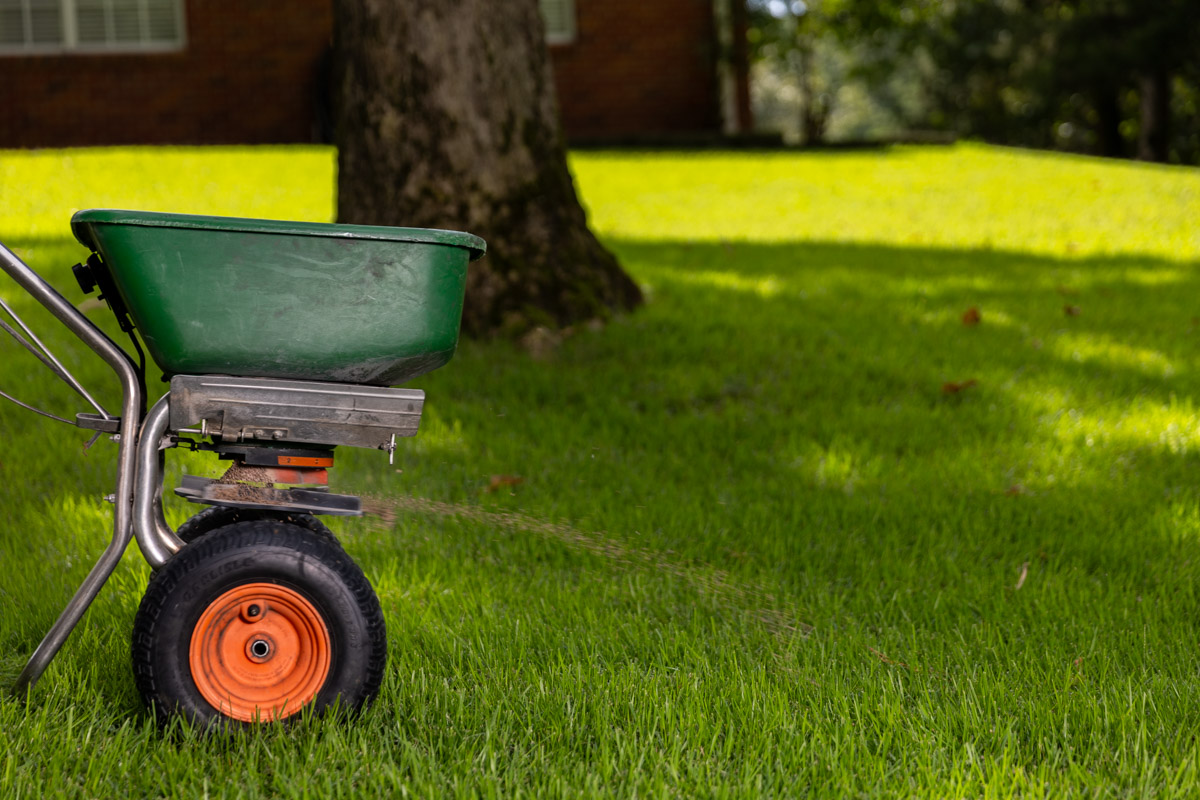
Grub Damage in Lawns: Signs, Grub Control & Lawn Recovery
Have you heard of lawn grubs?
Unless they’ve caused serious damage to your lawn, you may not have. It’s best to avoid encountering these pests, as they are not only disgusting but also quite sneaky.
What makes them so tricky? They damage your lawn mostly underground, so you often don’t notice their attack until it’s too late.
In fact, your grass can look just fine while grubs are eating away at the roots beneath it.
Grub damage in lawns not only ruins the appearance of your grass over time, but it also disrupts your lawn’s ability to take up essential water and nutrients. That makes it harder for your grass to survive and flourish.
Pretty mean, right?
Since grubs can cause significant lawn damage across North Mississippi, let’s discuss what lawn grubs are, how to spot the signs of grub damage, when grub control works best, and what you can do to help your lawn recover.
.jpg?width=800&height=536&name=Grub%20(CC).jpg)
What Are Lawn Grubs?
Lawn grubs are the larval stage of several types of beetles, including Japanese beetles and June bugs. They are typically white or cream-colored, C-shaped, and found beneath the soil surface.
After adult beetles lay eggs in the lawn, those eggs hatch into grubs that begin feeding on grass roots.
That underground feeding is what makes grubs particularly troublesome. You may not see the pest itself, but you’ll eventually see the effects of the damage it causes.
As temperatures drop before winter, grubs generally move deeper into the soil. They can become active again as conditions warm before eventually developing into adult beetles.
Knowing what to look for can help you catch a problem before lawn damage becomes severe.

%20CC.jpg?width=1923&height=1081&name=Japanese%20Beetle%20(Popillia_japonica)%20CC.jpg)
What Does Grub Damage Look Like in a Lawn?
Because grubs spend their time beneath the surface, identifying a grub problem usually starts with noticing changes in your grass.
Here are some of the most common warning signs.
Brown, Yellow, or Thinning Grass
If your grass is underperforming, that could be a sign of grub damage.
You might notice brown or yellow patches, thinning grass, or areas that appear unhealthy even though the rest of the lawn looks good.
Of course, brown grass alone doesn’t automatically mean you have grubs. Lawn diseases, drought stress, other insects, and various lawn care problems can produce similar symptoms. That’s why it’s important to look at the full picture.
Loose or Spongy Turf
Grubs feed on the roots that connect your grass to the soil.
As those roots are damaged, the lawn may begin to feel soft or spongy when you walk across it. In areas with significant root damage, you may even be able to lift or roll back the grass because it is no longer firmly attached to the soil.
That’s a much stronger indication that something is happening below the surface.
Animals Digging In Your Lawn
Another potential sign of grub activity is an increase in animals digging through your lawn.
Raccoons, skunks, birds, and other animals will search the soil for grubs.
.jpg?width=4000&height=2667&name=crow%20tearing%20up%20a%20lawn%20to%20feed%20on%20grubs%20(CC).jpg)
Grubs happen to be pretty juicy protein nuggets for these animals, so they may excavate your lawn with their paws, claws, or beaks to reach these snacks.
Unfortunately, that means a grub problem can lead to a second problem: animals creating even more lawn damage while looking for food.
How to Check Your Lawn for Grubs
Brown grass or animal activity can point you in the right direction, but if you really want to know whether grubs are hiding underneath your lawn, take a look below the surface.
Choose an area near the edge of the damaged turf and carefully cut and peel back a small section of grass. Look through the upper few inches of soil for white, C-shaped grubs.
If the turf lifts unusually easily because the roots have been eaten away, that can also indicate a significant grub problem.
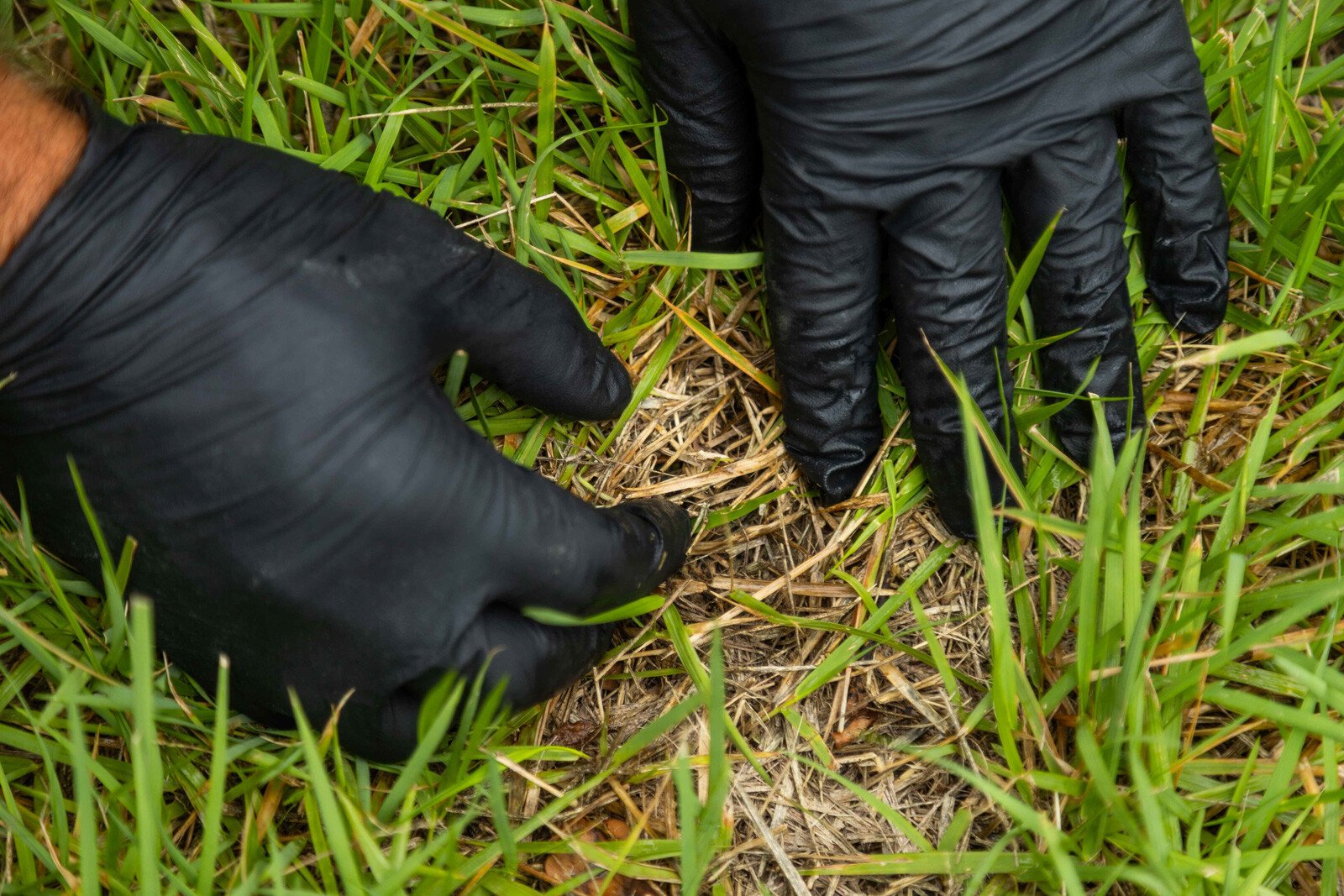
Keep in mind that finding an occasional grub does not necessarily mean your lawn requires treatment. Low grub populations can exist in otherwise healthy lawns without causing noticeable damage. The number of grubs, condition of the turf, and visible symptoms all matter when determining whether action is needed.
If you aren’t sure what you’re seeing, a lawn care professional can inspect the area and help determine whether grubs—or something else—are responsible for the damage.
When Is Grub Damage Most Common in North Mississippi?
Understanding the grub life cycle is important because the grubs underneath your lawn aren’t equally active or vulnerable throughout the entire year.
Adult beetles lay eggs that eventually hatch into small larvae. During the warmer months, those young grubs begin feeding on grass roots.
As they continue feeding and growing, lawn damage may become more noticeable. When colder weather arrives, grubs generally move deeper into the soil, where they are more protected.
That means the time when you notice grub damage isn’t necessarily the ideal time to prevent it.
And that brings us to one of the most important parts of grub control: timing.
When Is the Best Time for Grub Control?
When it comes to grub control, timing is crucial.
Young, newly hatched grubs are generally easier to control than larger, more mature grubs. In North Mississippi, this makes early to midsummer an important time to think about preventive grub control—even though you might not see obvious lawn damage yet.
By the time you have large sections of grass pulling away from the soil, the grubs may have already done considerable damage.
That’s one reason why prevention can be a much better strategy than waiting until the lawn starts showing serious symptoms.
At Lawn & Pest Solutions, we use an integrated pest management approach. That means looking at what is actually happening in your lawn and recommending targeted treatments when they’re needed and at times when they can be most effective.
If you want to learn more about why prevention is so important, check out our guide to why lawn care companies recommend grub control.
How to Repair a Lawn After Grub Damage
Once a grub problem is under control, there’s another obvious question:
Will your grass grow back?
The answer depends on how severe the damage is.
Minor grub damage may recover as your lawn becomes healthier and actively grows. This is especially helpful in North Mississippi, where common warm-season grasses can spread laterally into thin or damaged areas once the underlying problem has been corrected.
Proper fertilization, weed control, watering, and other lawn care practices can also help give your grass what it needs to recover.
More significant damage may take longer to fill in, particularly in areas where grubs have destroyed much of the root system.
The key is to solve the original problem first. Simply trying to improve a damaged patch without addressing active grubs won’t get you very far.
If you’re dealing with bare or thinning areas, our guide to repairing patches and bare spots in North Mississippi lawns explains what you can expect as your lawn recovers.
Can You Prevent Grub Damage?
In Tupelo, Corinth, and across North Mississippi, finding some grubs in the soil isn’t unusual.
The goal isn’t necessarily to create a lawn where no grub could ever exist. It’s to prevent populations from reaching the point where they cause significant damage.
A proactive lawn care program can help.
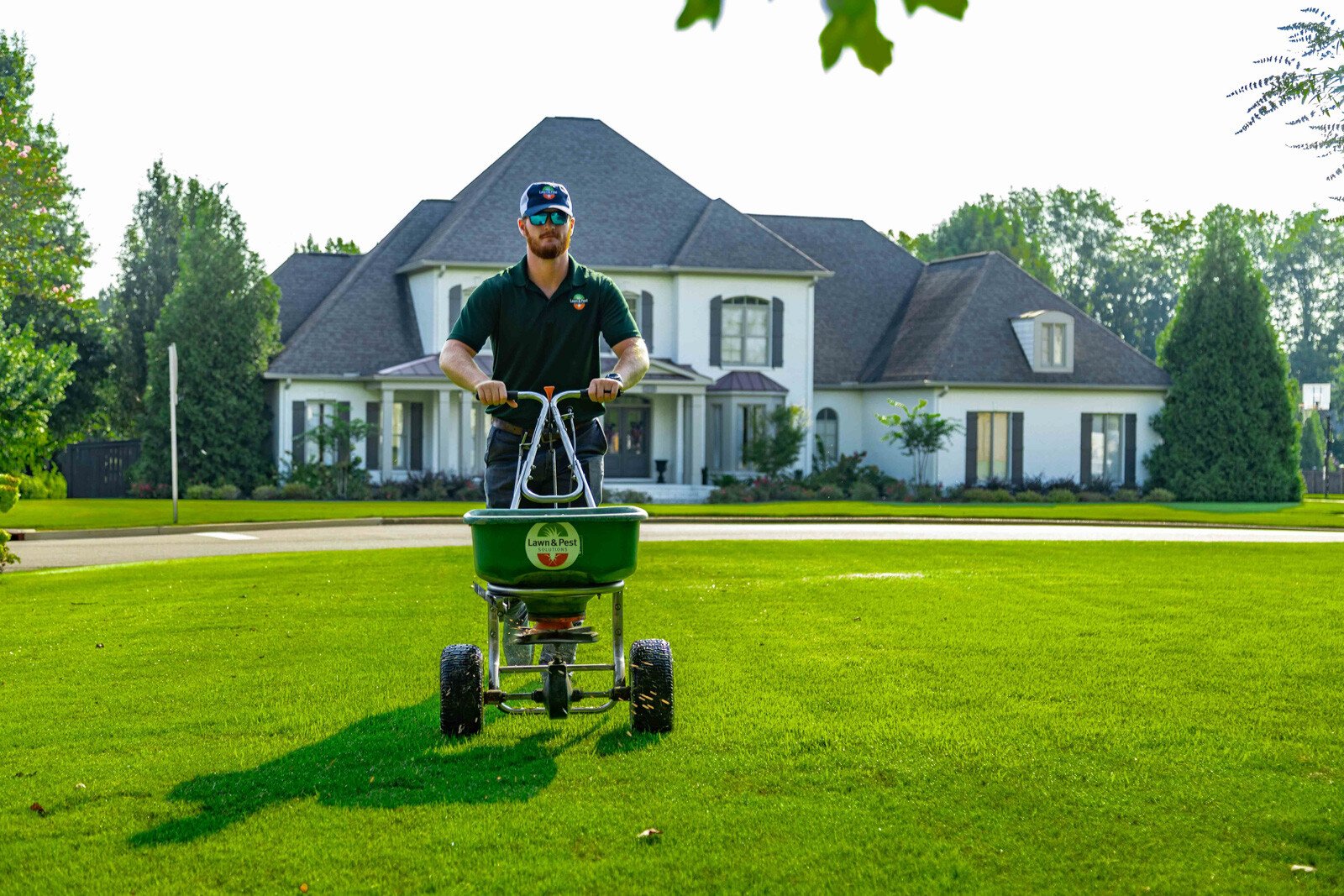
Along with properly timed grub control when needed, services such as fertilization and weed control help support a thicker, healthier lawn. When trained technicians are regularly on your property, they can also keep an eye out for developing pest problems and other changes in your grass.
That gives you a better opportunity to address problems early instead of discovering them after large sections of your lawn have already been damaged.
Want to Kick Grubs to the Curb? Let Lawn & Pest Solutions Help
The last thing you want to see is a lawn with bare spots, yellow areas, sections that pull up easily, and animals digging around and causing even more damage.
Grubs can cause frustrating lawn problems, particularly because so much of their feeding happens where you can’t see it.
And the last thing you need is to spend countless hours trying to diagnose the problem, experimenting with DIY grub control, repairing lawn damage, and wondering whether you actually solved the issue.
Professional lawn insect control can help you get ahead of the problem with the right diagnosis and properly timed treatment.
At Lawn & Pest Solutions, our trained technicians know the lawn pests that affect properties throughout North Mississippi. We can inspect your grass, look for signs of grub activity, and recommend a lawn care plan based on what your property actually needs.
Ready to learn why Lawn & Pest Solutions could be your choice for professional grub control in North Mississippi?
Get started today with a free quote. Together, we can create a customized plan to help you get back to enjoying a healthier, better-looking lawn.
Image Source | Grub, Crow Feeding on Lawn Grubs, Japanese Beetle
Give Grubs the Boot
