
How to Stop Armyworms Before They Destroy Your North MS Lawn
Armyworms in North Mississippi can be highly destructive for a few key reasons. One of the biggest reasons is that they feed in massive, coordinated numbers. In fact, that’s how these pests got their name. They are called armyworms because of the way that they move through a lawn in large, organized groups…like an army.
Unfortunately, if you have any of these troops marching through your grass, you could be in deep trouble. Armyworms have a voracious appetite and feast quickly as they move. They can defoliate a lawn in days.
For that reason, the best strategy is to prevent armyworms in Mississippi lawns in the first place.
Jump to Section
- What are armyworms?
- Signs of armyworm damage in your lawn
- Understanding the lifecycle of armyworms in North Mississippi
- How to get rid of armyworms
- FAQs on Armyworms in North Mississippi
- Choosing Professional Armyworm Treatment in North Mississippi
In this article, we’ll cover everything you ought to know about armyworm lawn treatment.
What are armyworms?
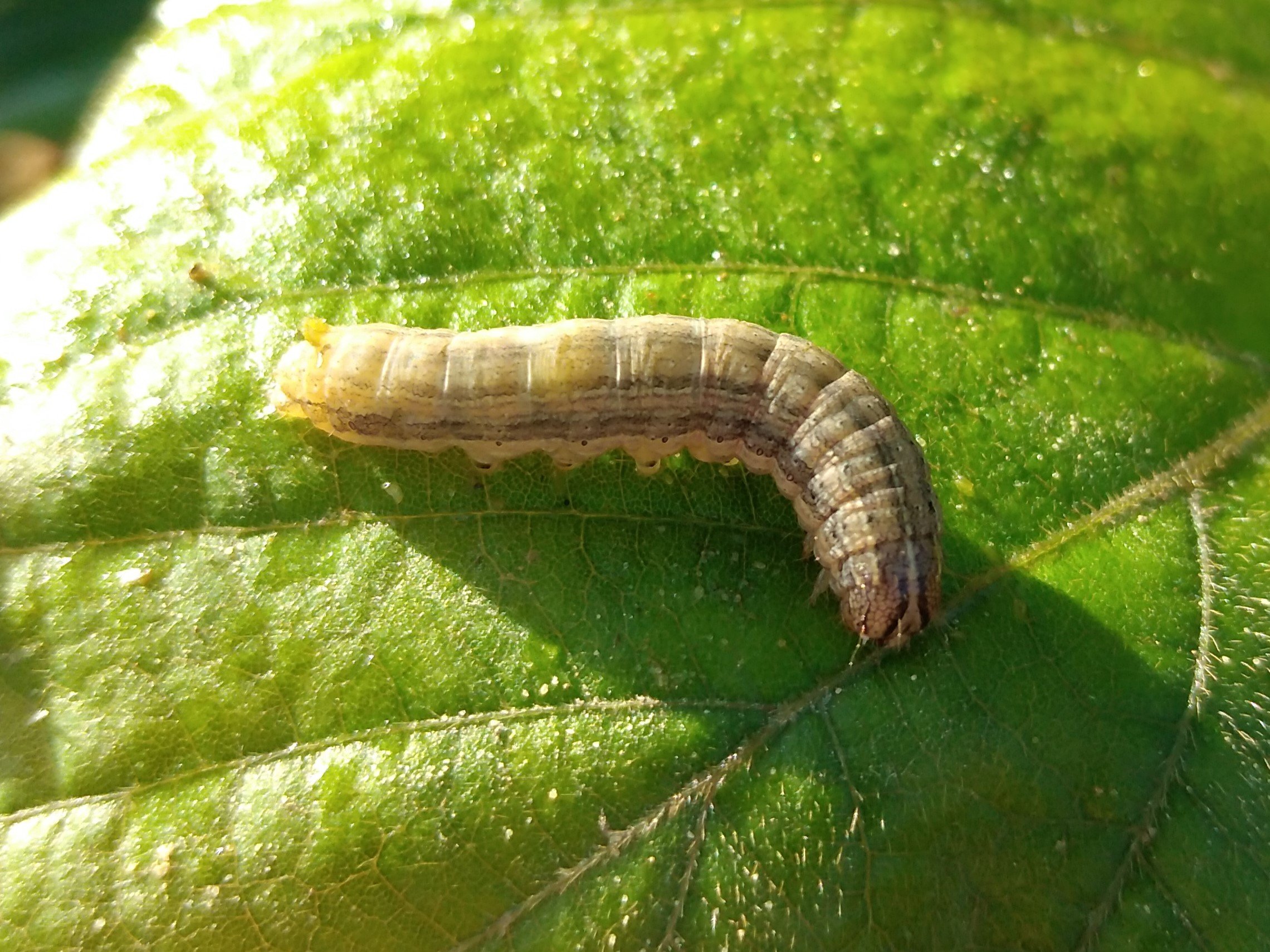
Armyworms are highly destructive caterpillars that feed on grass. They are 1-inch to 1.5 inches long and dark greenish-brown to black with long, white, orange, and dark brown stripes along the abdomen.
True to their name, armyworms travel in large groups. While a single armyworm might not be a big worry, you’ll almost never find these pests alone. There could be thousands of these caterpillars traveling together at once. That’s why they’re so likely to do damage.
Signs of armyworm damage in your lawn
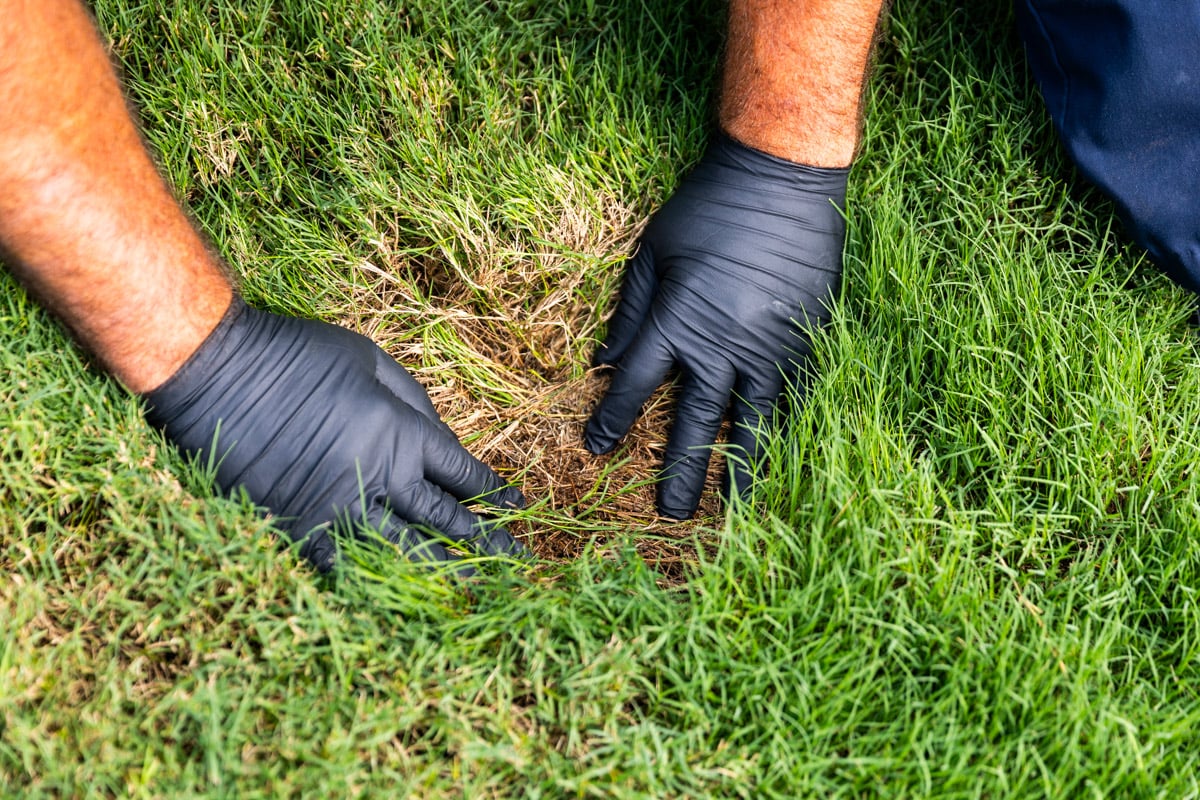
Early armyworm damage can look like drought-stressed, brown grass, but heavy infestations can lead to complete browning. Of course, other lawn problems can also cause brown spots.
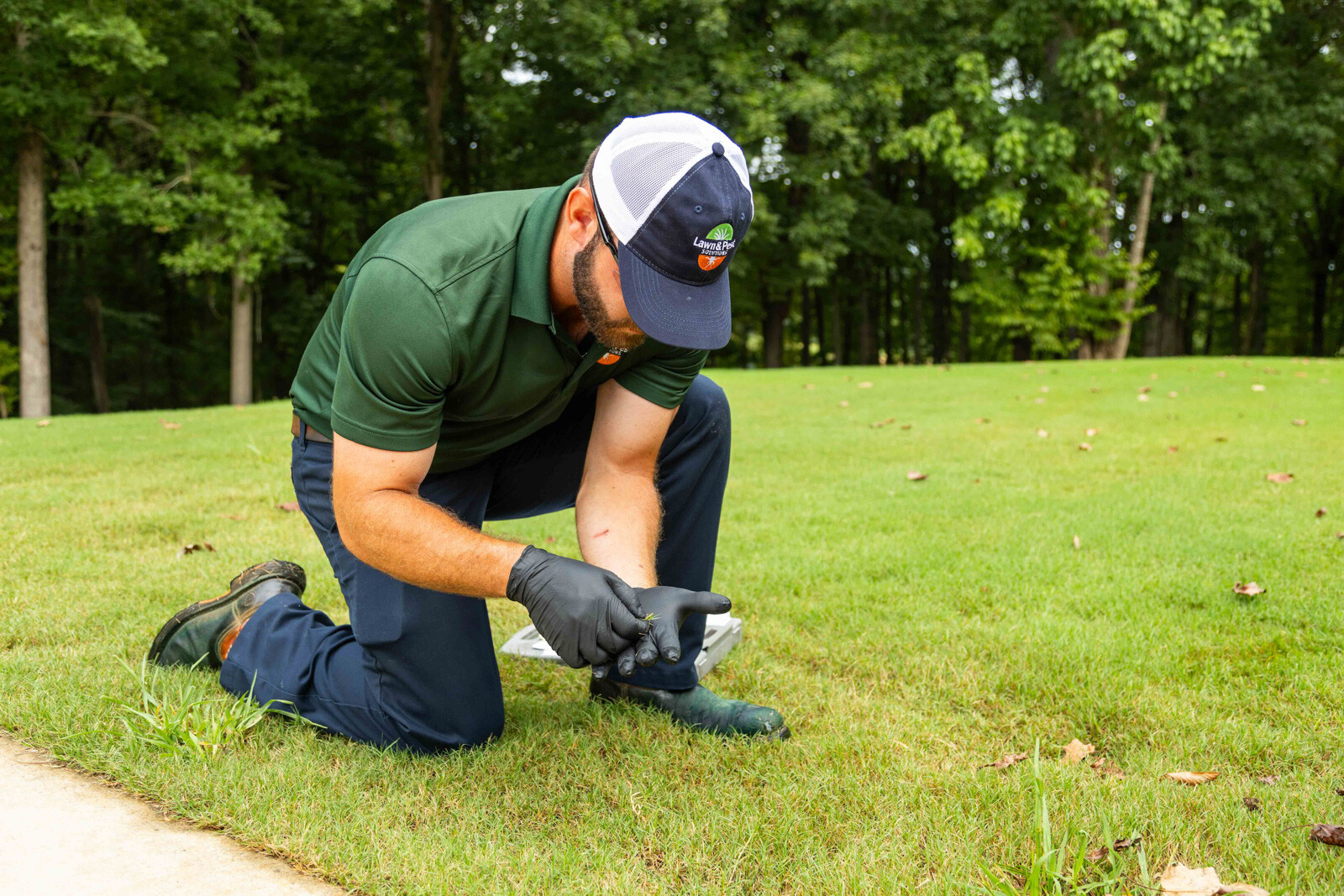
To determine if the problem is armyworms, examine your lawn closely. Armyworm damage shows up as ragged holes in individual grass blades or areas where grass has been eaten down to the ground, forming brown patches. Another sign of armyworm activity is a lacy, transparent pattern on chewed grass blades.

Here’s a kicker: These pests particularly favor new sod or freshly seeded grass!
Sometimes homeowners notice increased bird activity in their lawn when they have armyworms. Since birds do eat armyworms (amongst other lawn pests), it’s worth exploring.
Understanding the lifecycle of armyworms in North Mississippi
Armyworms cannot survive freezing temperatures, so each year the cycle restarts as armyworms migrate to North Mississippi. As temperatures warm up, adult moths migrate to our region.
Adult moths typically arrive in South Mississippi around April or May, and start laying eggs on flat leaves of trees and flowers or even on patio furniture and light posts. This begins the cycle in our state.
By June, moths typically arrive in North Mississippi and become a local problem for us as they lay more eggs. They may enter your space on air currents, then drop to settle in.
Each female can lay egg masses containing 100-500 armyworm eggs. The eggs hatch five to seven days later. The armyworm larvae are what eat their way through your lawn. You might be able to spot the eggs yourself. Look for sticky egg masses on buildings, patio sets, decor, plants, and other outdoor surfaces.
Depending on timing (and how early they arrive), armyworms may complete 2 to 5 lifecycles in a single season.
How to get rid of armyworms
The goal should be to prevent armyworms in your Mississippi lawn. You can control armyworms with insecticide treatment. But since armyworms can have multiple generations per year, you may need various applications per year to keep these pests at bay.
Today, we have new chemical combinations that help prevent armyworms in the first place. Because this pest is so destructive, a proactive approach is key.
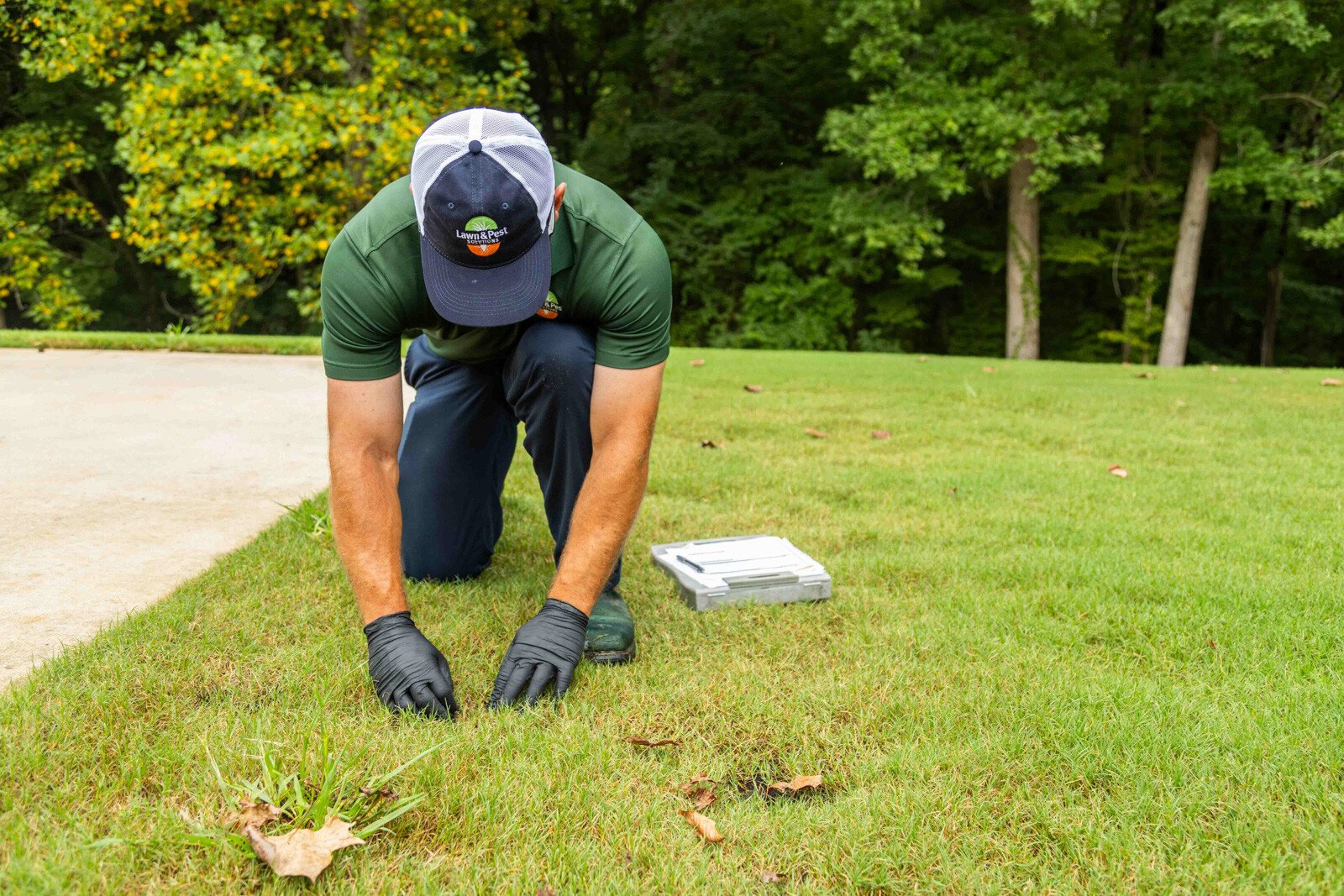
At Lawn & Pest Solutions, we schedule a prevention spray each year for our customers. This protects customers during the armyworm activity period, and if they still see armyworms, we will retreat at no charge.
We can also spray reactively, but that's frustrating because you see damage and then have to wait to stop it. We get to those ASAP, but in bad years armyworms can cause damage quickly.
If you’ve already experienced armyworm damage, you might need lawn restoration efforts.
If armyworms have only fed on the upper portion of your grass blades, they might recover on their own with proper care.
However, in severe infestations, reseeding or resodding the affected areas becomes essential to restore the lawn.
This is because the feeding process is similar to cutting your lawn too short, removing too much of the plant at once, which can cause the plants to struggle to survive the shock.
FAQs on Armyworms in North Mississippi
What do armyworms do to a lawn?
Armyworms can defoliate a lawn as they feast on the grass blades. They can completely skeletonize the blades or leave bare areas in their wake.
How can I prevent armyworms from damaging my lawn?
You can apply preventive products to your lawn to keep these pests out. This is the best approach to armyworm control.
When are armyworms most active in Mississippi?
Typically, the period between July 4th and Labor Day is the peak season for armyworm activity in North Mississippi.
Should I treat armyworms myself or hire a professional?
If you want to give your lawn the best chance to stand up to armyworms, then you’ll want to hire a professional who can implement lawn insect control.
Unfortunately, armyworms are now resistant to most DIY products. This has been a new development in the last several years. DIY solutions either don't work at all or take several applications. Why bother with that frustration?
Can a lawn recover from armyworm damage?
Most of the time, thankfully, yes, your lawn can recover from armyworm damage. However, late-season damage isn't good for the lawn, and we occasionally see long-term effects. Some years, it will thin the grass the following growing season, and sometimes it leads to dead patches.
Choosing Professional Armyworm Treatment in North Mississippi
Armyworms are a pest that you simply don’t want to deal with in your lawn. Once the weather gets hot, you want to stay on top of these pests to avoid severe lawn damage. Their highly destructive eating habits make them a major threat.
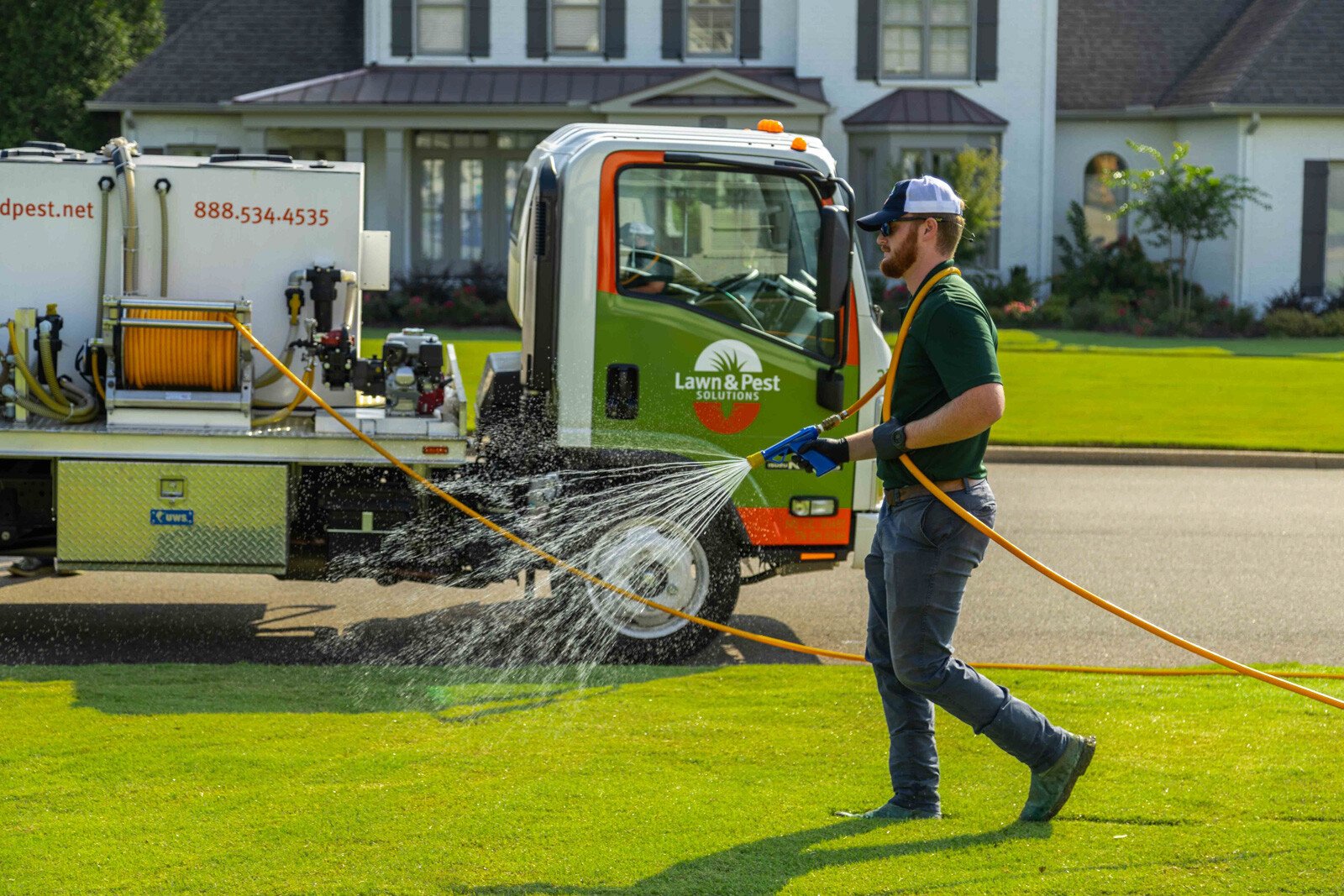
Fortunately, this isn’t a problem that you have to face on your own.
We’d love to help you with armyworm control in North Mississippi. We can use preventive treatments to protect your lawn investment.
Ready to stop the armyworms in Tupelo, Oxford & New Albany, MS? Request a free quote today. We’ll review your options together so you can choose what's best for you. Then you can sit back and enjoy your yard – worry-free!
Image Source | Armyworm
Ready to Protect Your Lawn from Armyworms?
